
The Rich History of the Hartog-Est Family Business

A Vision for Progress and the Future

That is something that has united the Vehicle Body Builders at Hartog-Est for generations. The roots of our Historic Family Business date back to the early 19th century—the year 1825, to be exact. Since then, we have witnessed many developments in the transportation industry from the inside out—from a focus on simple farm wagons to the invention of the automobile and, more recently, developments toward what may well be fully autonomous trucks in the future.
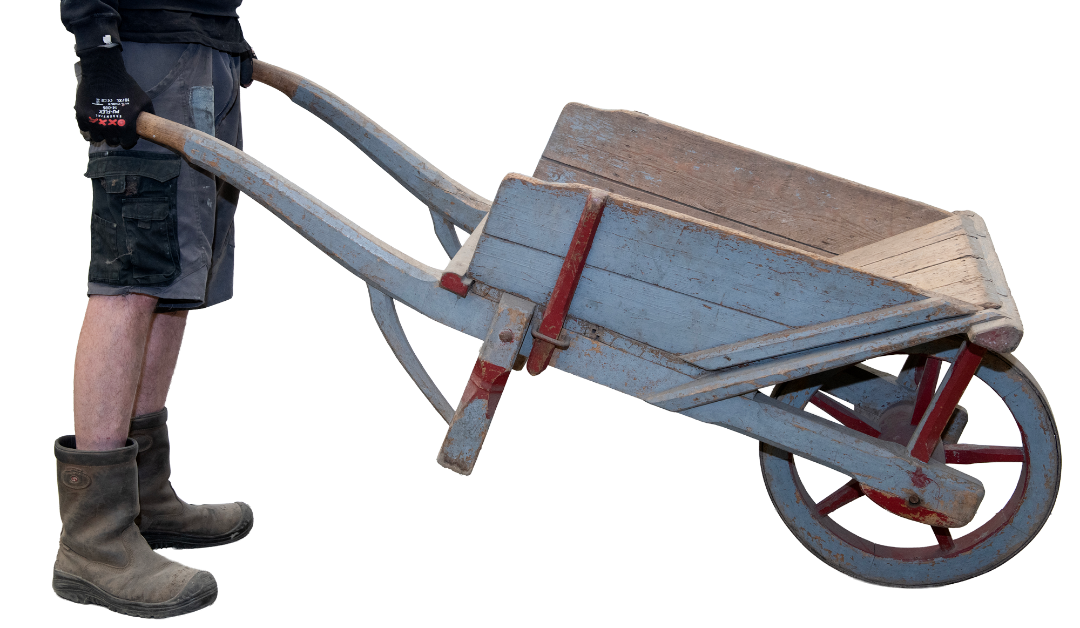
Of course, after all these generations of Vehicle Body Builders, there’s much more to tell than we can share on our site. Interested in the full Hartog-Est story? Then check out our booklet “Het nodig werk van waagenmaken” at the bottom of this page—it’s full of fun anecdotes and interesting facts! For more historical photos, visit our Instagram page. The first mention of a wheelwright in the village of Est dates back to 1825. At that time, no one had yet heard of an “automobile,” so the first generations of wheelwrights focused primarily on building simple farm wagons and wheelbarrows. They also carried out repairs on carriages and carts.

The first Vehicle Bodies

The Den Hartog family first came into the picture in 1879, when W.J.E. (Everard) den Hartog received his father-in-law Frank van der Klift’s carriage-building business as a wedding gift. It wasn’t until after World War I that the company underwent significant changes. Everard’s son (also named Everard) then joined his father’s business—which had been left to him following his father’s sudden death—as a specialized coachbuilder. A Blacksmith Workshop was added, run by his brother Jan, and together with his other brother, Nico, Everard began building the first vehicle bodies, ranging from small Platform Bodies to enclosed vehicle bodies. Developments gained momentum, and in the decades that followed, the customer base expanded rapidly throughout the Netherlands. The facility was renovated and expanded, and the company hired more and more staff.

New Plans and Products

Until World War II threw a wrench in the works. By then, his son Everard had joined the company and had plenty of plans for the future—including a trailer factory—but those plans were forced to be put on hold until the war was over. During the war, his son Everard was born, now the fourth generation of the wagon-maker family. After the war, the company began to thrive again. They worked on new products, ranging from folding trailers to truck cabs and buses. In the 1950s, the company weathered the economic crisis thanks to a great deal of perseverance.

Future-Proof

The fourth Everard took over from his father following the latter’s sudden death in 1972. He continued to expand the company, perfected the quality of the products it supplied, modernized the machinery, and steered the company through two major new construction projects. The last time was during the move from Est to the Slimwei industrial park in Waardenburg, where the company gained opportunities to grow into the future at a modern, new location.

The name “Den Hartog’s Vehicle Body Manufacturer” was changed to “Carrosseriefabriek Hartog-Est” as a tribute to the company’s birthplace. By then, Everard’s son Jorrit had also joined the company, and in 2003, Everard handed over the reins of Hartog-Est to this fifth generation.

Father Everard passed away in 2024. Jorrit brought his own vision to Hartog-Est, steered the company through a turbulent period, and, through a number of strategic decisions, made it future-proof. We are enthusiastically establishing new partnerships, tapping into new markets, and have now entered the Family Business’s 200th anniversary with confidence.

Den Hartog‘s 125th Anniversary Book

Open Book